
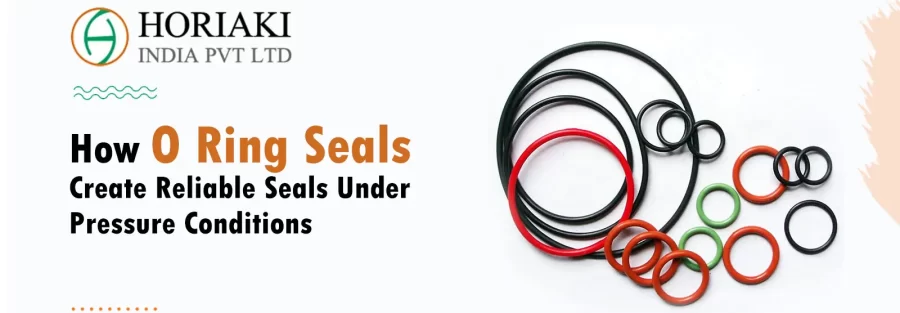
In the industrial world, pressure is just a part of the daily grind. Whether you are dealing with oil, air, or gas, these fluids are moving through machines with an incredible amount of force. If your seals aren’t up to the task, you are going to see leaks almost immediately. Those leaks can stall your production lines, waste expensive materials, and create genuine safety risks for everyone involved.
This is where O Ring Seals prove their value. They may look simple, but they are essential components for effective sealing in systems that operate under pressure. Their small size hides how important they really are when it comes to keeping equipment tight and reliable.
What is an O Ring Seals, and why do we use them?
Essentially, an O Ring Seals is a simple, round loop made from stretchy stuff like rubber or other elastomers. It’s designed to sit perfectly inside a little carved-out channel, which engineers usually call a “gland,” tucked right between two parts of a machine that need to join together.
Once you bolt the parts together, it blocks the path for any fluid or gas trying to escape. As they are perfectly round, they handle pressure evenly from all sides. This simple geometry is why you find them in everything from your car engine to massive industrial pumps and miles of pipeline.
How they actually handle the pressure
When you first put an O Ring Seals in, you “squeeze” it slightly. Before you even turn on the machine, this first squish forms a seal.
But when the pressure increases, that’s when the real magic happens. The rubber is actually forced to distort and press even harder against the groove walls as the fluid presses against the seal. Therefore, the pressure actually helps the O Ring Seals plug any small gaps rather than blowing the seal out.
Industries where you’ll find O Ring Seals
You can find O Ring Seals just about everywhere that fluids or gases are under pressure. In cars, they are the unsung heroes in your engine, fuel lines, and brakes that keep everything from leaking. Out in the oil fields, they are used in massive pipelines and drilling gear to handle some of the highest pressure conditions on the planet.
In factories, engineers rely on them to keep hydraulic tools and production machines running without losing power. You’ll also find them in water treatment plants and chemical labs, where they have to stand up to all sorts of liquids and temperature changes.
Basically, if there’s a joint or a connection that needs to stay bone-dry under stress, there is probably an O Ring Seals doing the work.
Choosing the Right O Ring Seals
Not all rubber is built the same way. You have to match the material to whatever is actually flowing through your pipes. A seal that works great for water might completely dissolve or swell up if it touches oil or harsh chemicals.
Temperature is the other big factor you can’t ignore. If the rubber gets too hot, it can bake and become brittle; if it gets too cold, it loses its stretch and stops sealing entirely. By picking a material that can handle your specific environment-and stay flexible through it all-you are ensuring a more reliable system with way fewer “emergency” repairs.
The Bottom Line
An O Ring Seals are ultimately a straightforward, clever way to seal under pressure. It is essential because of its capacity to squash, adapt, and respond to force. These tiny rings can stop serious issues if they are made of the proper material and design.
Horiaki India Private Limited specializes in high-quality O Ring Seals and custom rubber sealing solutions. They focus on everything from custom molded parts to rubber-to-metal bonding, supporting the automotive and oil industries with seals that actually last.

Horiaki India Private Limited
Horiaki India Private Limited was established in the year 1998 with an aim to manufacture and supply premium rubber bonded products in India as well as the international market.