
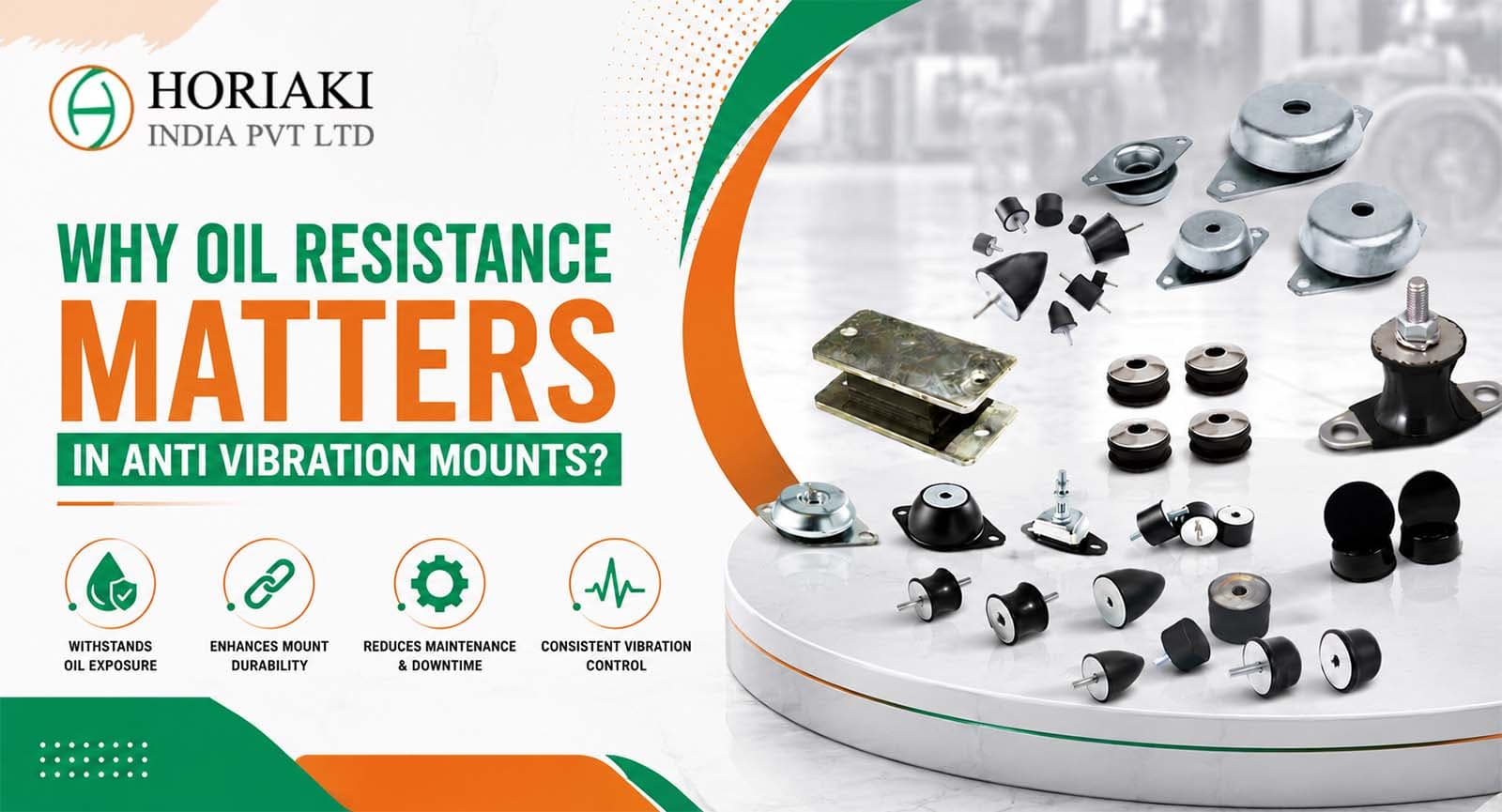
Why Oil Resistance Matters in Anti Vibration Mounts?
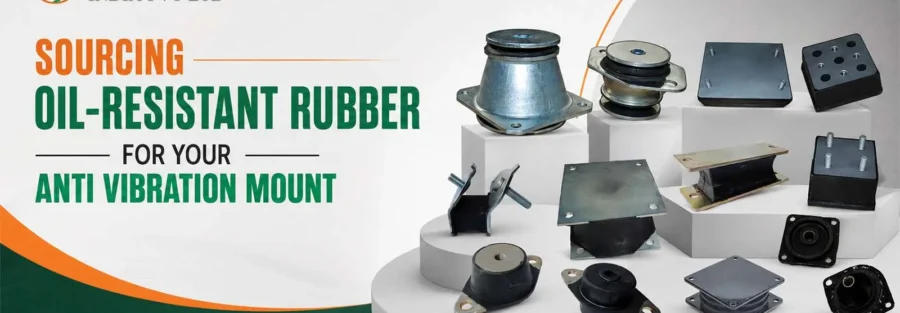
AV mounts are rubber-to-metal bonded components that isolate vibration between a machine and its mounting surface. They work by absorbing and dissipating the energy from vibration before it transfers to the surrounding structure. In most industrial and automotive applications, they do this job reliably for years.
The problem starts when the environment around the mount contains oil — engine oil, hydraulic fluid, fuel, gear oil, or cutting fluid. Standard natural rubber, which is used in most general-purpose AV mounts, has poor resistance to hydrocarbon-based oils. Exposure causes the rubber to absorb oil, swell, soften, and eventually lose the mechanical properties that make it effective as a vibration isolator.
For any application where oil contact is possible, the rubber compound in the anti vibration mounts must be specifically selected for oil resistance.
What Happens When the Wrong Rubber Comes in Contact With Oil?
The failure mode of an oil-contaminated rubber mount follows a consistent pattern:
- Swelling — the rubber absorbs oil and increases in volume, which changes its stiffness and alters the vibration isolation characteristics the mount was specified for
- Softening — oil absorption reduces the rubber’s Shore hardness, making it less able to support the static load of the equipment it’s mounting
- Bond failure — as the rubber swells and softens at the rubber-to-metal interface, the adhesive bond between rubber and metal plate weakens; the rubber can detach from the metal under dynamic load
- Cracking and degradation — prolonged oil exposure eventually causes oxidative degradation that leads to surface cracking and loss of elasticity
- Loss of damping performance — a rubber that has swelled and softened no longer has the dynamic properties it was designed with; vibration transmission increases and the equipment begins to shake more
In practice, this means equipment mounts that are failing well before their expected service life, with vibration levels increasing over time and eventually metal-to-metal contact when the rubber separates from the mounting plate.
Oil-Resistant Rubber Compounds for Anti Vibration Mounts
Several rubber compounds offer meaningful oil resistance and are used in AV mounts for oily environments:
Nitrile Rubber (NBR)
The most widely used oil-resistant rubber compound for industrial and automotive applications. NBR has excellent resistance to petroleum-based oils, fuels, and hydraulic fluids. It’s the standard choice for anti-vibration mounts used near engines, gearboxes, and hydraulic systems.
- Good resistance to petroleum oils, diesel fuel and hydraulic fluids.
- Moderate temperature range – usually -40°C to +120°C
- Good wear resistance and mechanical strength
- Cost effective vs specialty compounds
- Available in different hardness levels
Hydrogenated Nitrile Rubber (HNBR)
An advanced type of NBR with better heat resistance and mechanical properties. Designed for high temperature oil environments.
- Better heat resistance than standard NBR – continuous service to 150°C
- Good resistance to petroleum oils and certain synthetic lubricants
- More expensive than standard NBR.
- Used in automotive engine mounts and high temp industrial applications
Neoprene (CR — Chloroprene Rubber)
Offers good oil resistance and excellent weather and ozone resistance. Not as oil resistant as NBR, but a practical option where both oil and outdoor exposure are factors.
- Moderate petroleum oil resistance
- Good weather, ozone, and UV resistance
- Suitable for applications with both oil splash and outdoor exposure
- Less effective against aromatic hydrocarbons and fuel
Fluorocarbon Rubber (FKM / Viton)
The highest oil and chemical resistance available in elastomers. Used when standard NBR isn’t sufficient — aggressive synthetic oils, high temperatures, or chemical resistance requirements beyond petroleum.
- Excellent resistance to petroleum oils, synthetic lubricants, and many chemicals
- High temperature resistance — up to 200°C and above
- Significantly higher cost than NBR or neoprene
- Used in specialist automotive, aerospace, and chemical processing applications
How to Match the Rubber Compound to the Application?
Selecting the right rubber compound involves understanding the specific conditions the anti vibration mount will face:
Type of oil or fluid
Petroleum-based mineral oils — engine oil, hydraulic fluid, gear oil — are well handled by NBR. Synthetic lubricants and automatic transmission fluids may require HNBR or FKM. Aromatic fuels and some chemicals need FKM.
Operating temperature
Standard NBR handles up to around 120°C continuously. If the mount is near exhaust systems or high-temperature processes, HNBR or FKM is needed. Temperature above the compound’s rating causes accelerated degradation even in the absence of oil.
Severity of oil exposure
Occasional oil splash is a different condition from continuous immersion. A mount that occasionally gets oil spray can often be managed with NBR. A mount sitting in an oil sump environment needs FKM.
Static load and dynamic frequency
The rubber compound choice affects the stiffness of the mount and therefore its vibration isolation performance at specific frequencies. Changing the compound changes the isolation characteristics — this needs to be accounted for in the mount design.
What to Check When Sourcing Oil-Resistant Anti Vibration Mounts?
When specifying and sourcing anti-vibration mounts for oily environments:
- Confirm the rubber compound — don’t assume oil resistance; ask for the specific compound and its fluid resistance data
- Request test data or material certification — reputable manufacturers can provide compound specifications confirming oil swell values
- Check the temperature rating — confirm the compound is rated for the actual operating temperature, not just ambient
- Verify bond integrity — ask about the bonding process and whether the rubber-to-metal bond has been tested under combined oil exposure and dynamic load
- Specify the fluid — give the manufacturer the actual fluid the mount will be exposed to; not all oils are the same and compound selection should be based on the specific fluid
- Check hardness grade — oil-resistant compounds are available in multiple hardness grades; the right grade affects isolation performance as much as load rating
Source Anti Vibration Mounts from Horaiki India
Horaiki India manufactures and supplies AV mounts in a range of rubber compounds — including oil-resistant NBR and specialty grades — for automotive, industrial, marine, and heavy equipment applications, with technical guidance on compound selection for specific operating environments.
Frequently Asked Questions

Horiaki India Private Limited
Horiaki India Private Limited was established in the year 1998 with an aim to manufacture and supply premium rubber bonded products in India as well as the international market.